
Building your dream home is a major commitment. From planning and construction costs to material selection and quality checks, every stage must be carefully managed.
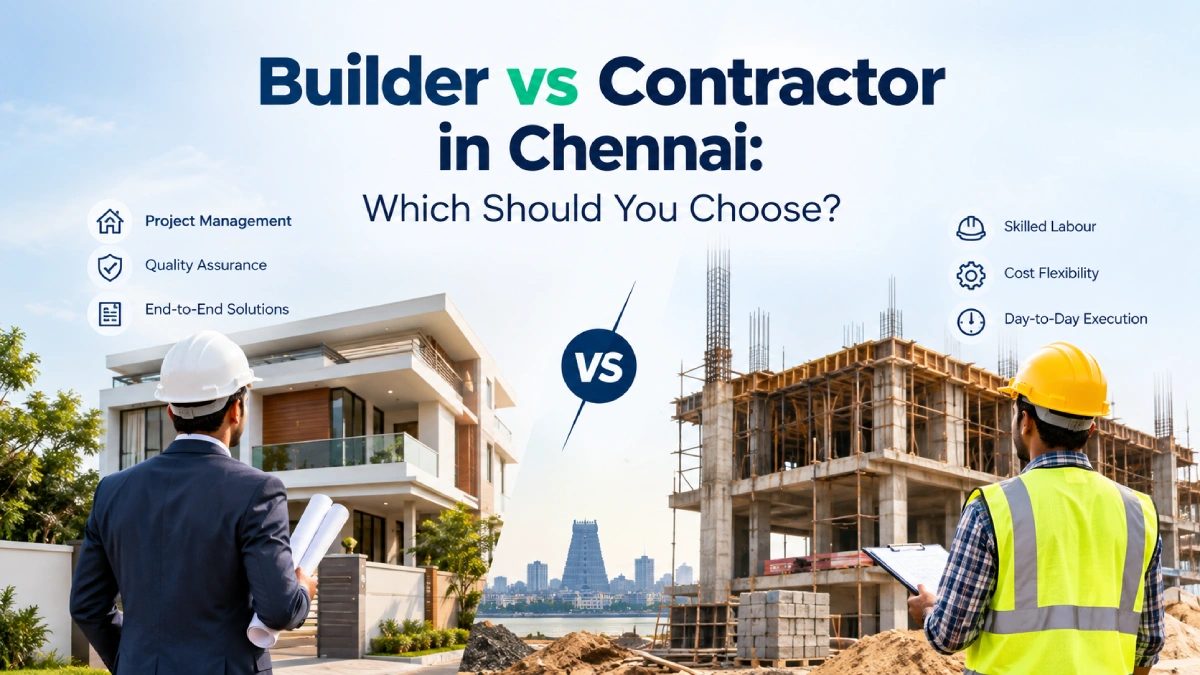
If you are planning to build a house in Chennai, you may be wondering whether you should hire a builder or a contractor. Although both provide construction-related services, their responsibilities and level of involvement can differ significantly.
Understanding the difference between a builder and a contractor can help you choose the right option for your project.
Related Tags
Plots in Medavakkam,
Flats in Sithalapakkam
What Is a Builder?
A builder is generally responsible for overseeing and coordinating the construction of a project. Depending on the service package, a builder may handle planning, design, construction, material procurement, labour management, quality checks, and project completion.
For homeowners who want a complete solution, partnering with a builder can make the construction process more streamlined. Instead of managing multiple independent teams, homeowners can work with one experienced team that coordinates the entire project.
A builder may work with:
- Architects and structural engineers
- Civil construction teams
- Electricians and plumbers
- Flooring and painting professionals
- Material suppliers
- Project management teams
This approach can be especially beneficial for first-time homeowners who may not have experience managing a construction project.
What Is a Contractor?
A contractor is usually hired to complete a specific construction project or a clearly defined portion of a project. Contractors may handle general civil construction or specialise in specific areas such as electrical work, plumbing, flooring, painting, or other building-related trades.
For example, a homeowner may hire one contractor for civil work and separate specialists for electrical, plumbing, flooring, and finishing work.
This approach offers flexibility, but it also places more responsibility on the homeowner to coordinate different teams, materials, schedules, payments, and quality standards.
Builder vs Contractor: What’s the Difference?
The main difference between a builder and a contractor is the level of project management and coordination involved.
1. Overall Project Management
Builder: A builder may oversee the entire construction process, from design and planning to construction and handover. They can schedule multiple trades, coordinate teams, and track the overall progress of the project.
Contractor: A contractor is generally focused on completing the work included in their individual contract. The homeowner may need to coordinate other contractors and construction stages separately.
2. Design and Planning
Builder: Depending on the agreement, a builder may provide or coordinate architectural design, structural planning, floor plans, approvals, and other preparatory work.
Contractor: Design and planning may need to be arranged separately unless they are specifically included in the contractor’s scope of work.
3. Material Procurement
Builder: Depending on the agreed specifications, the builder may be responsible for purchasing, transporting, storing, and managing construction materials.
Contractor: The contractor may supply the materials, or the homeowner may purchase them directly. This responsibility should be clearly mentioned in the agreement before construction begins.
4. Quality Monitoring
Builder: An experienced builder can conduct quality checks at different stages of construction to ensure that the work meets the agreed specifications.
Contractor: If multiple contractors or subcontractors are involved, the homeowner may need to take a more active role in monitoring and coordinating the quality of each stage.
5. Communication
Builder: A full-service construction team provides a single point of contact for design, materials, labour, construction, and project updates.
Contractor: When multiple contractors are hired separately, the homeowner may need to communicate with different teams for different tasks.
Which Is Better for Home Construction in Chennai?
There is no single right answer for every homeowner. Your decision should depend on your construction experience, budget, project size, and the level of involvement you want in the building process.
If you are comfortable organising and coordinating different teams, a contractor-based approach may work well for you. However, you will need to manage schedules, materials, quality checks, payments, and communication between various professionals.
If you prefer a more streamlined construction process that includes design, planning, execution, quality monitoring, and project management under one roof, hiring an experienced construction company in Chennai may be a more convenient option.
For first-time homeowners, professional project management can make it easier to make construction decisions, track progress, control costs, and avoid unnecessary delays.
Benefits of Choosing an End-to-End Construction Service
An end-to-end construction service combines multiple stages of construction into one coordinated process. This allows homeowners to work with a single team instead of managing several independent professionals.
Possible benefits include:
- Single point of contact
- Better coordination between different teams
- Professional design and detailing
- Material procurement and control
- Organised construction schedules
- Periodic quality audits
- Improved project tracking
- Simplified budget management
- Support from design to final handover
Services may vary from one company to another. Therefore, homeowners should carefully review the agreement, inclusions, exclusions, specifications, and scope of work before construction begins.
What to Consider Before Hiring a Builder or Contractor
Before hiring a builder or contractor, evaluate their construction quality, experience, communication, transparency, and ability to deliver the project according to your requirements.
Important factors to check include:
Previous Projects
Review completed projects to assess the quality of construction, workmanship, finishing, and design execution.
Relevant Experience
Look for experience related to your project type, whether it is an independent house, villa, apartment, renovation, or commercial building.
Scope of Work
Ensure the agreement clearly states what is included and excluded from the project.
Material Specifications
Confirm the quality, brand, grade, and specifications of the materials to be used.
Project Timeline
Ask about the expected construction duration, major milestones, and anticipated handover date.
Payment Terms
Understand the payment schedule and check whether there are any additional or potential charges.
Quality Checks
Ask how construction quality will be monitored at important stages such as foundation work, structural construction, waterproofing, electrical installation, and finishing.
Communication
Choose a team that provides regular updates and responds clearly to your questions and concerns.
Why Turnkey Construction Can Be a Good Option
For homeowners who want a convenient, all-in-one solution, turnkey construction can simplify the process. Under this approach, one construction team manages the project from planning and design through construction and final handover.
Depending on the package, turnkey construction may include:
- Architectural design
- Structural design
- Customised floor plans
- Foundation and structural construction
- Material procurement
- Electrical and plumbing work
- Flooring and painting
- Quality inspections
- Project management
- Final handover
Build Your Dream Home With Confidence
A builder or construction company is generally better suited to homeowners who want an entire project managed from start to finish. A contractor may be suitable when you need help with a specific construction job or prefer to coordinate the project yourself.
If you are looking for expert assistance from the planning and design stage through construction and handover, an experienced construction company in Chennai can provide a more integrated and organised building experience.
Related Blogs
How to Plan Your House Construction Budget in Chennai
Is Your Home Ready for a Change? 7 Signs It’s Time to Renovate
