
A durable and comfortable household needs high quality material designs. And, It is equally important to protect the structure from moisture, water leaks, and long term erosion through correct waterproofing. In different stages of construction, a well experienced construction company in Chennai can help homeowners come up with appropriate water-proofing solutions. In cricketing Karnataka where it is rainy in the monsoon season, high humidity and variable weather conditions, therefore waterproofing plays a crucial role in keeping homes safe and solid.
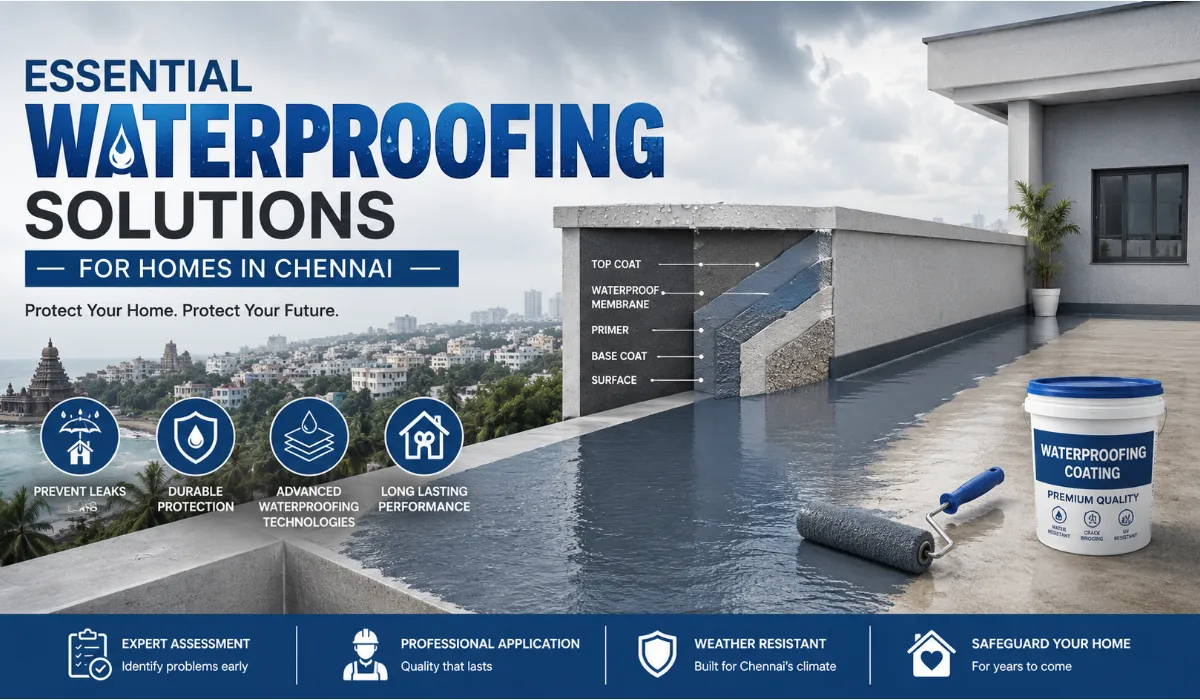
Why Is Waterproofing Important for Homes in Chennai?
Water leakage may sound like a small problem at first, but as time passes it will create problems in walls, ceilings, floor and at its very essence, overall structural integrity of the building. Prevent these problems with proper water proofing and increase the life of your property.
Some important benefits include:
- Stop Water Leakage
- Protects the Structure of the Building
- Stop Damp Walls
- Prevents Mold
- Improves Building Durability
6 Essential Waterproofing Solutions for Homes
Determining the suitable waterproofing method takes into consideration the site of the project, the design of the structure, the condition of the surface, and the likelihood of getting wet. Below are six major solutions to consider for homeowners.
1. Terrace and Roof Waterproofing
Terraces and roofs are directly exposed to the sun and rain. In some cases, poor waterproofing can create the possibility of rain water getting into the ceiling and creating leakage problems.
Recommended solutions:
- Use proper water proof coating.
- Make sure the terrace is sloping in a way which will allow water to drain and not accumulate on the terrace.
- Make certain that outspring and drainage for collecting rain water are maintained.
- Inspect the terrace very often, especially the month before the monsoon season begins.
2. Bathroom Waterproofing
The bathrooms are among the most crucial areas to waterproof during construction because they are never far from water.
Important measures include:
- Make sure to treat moisture proofing membranes underneath flooring with waterproofing.
- Waterproof all floor and wall junctions which need to be closed off.
- Find a waterproof grout and sealants fit.
3. External Wall Waterproofing
The outside walls are constantly exposed to rain, sunshine and humidity in all seasons. Through the collapses in exterior work or through the cracks this water can enter the building.
Effective preventive measures:
- Mould resistant exterior paint is recommended.
- Close visible cracks and construction joints.
- Add cement stone slurry if necessary and actualize the plaster mix with appropriate waterproofing additives.
- Check the mortar joints of the windows and doors.
- Look for evidence of damp patches on the building’s outer walls.
4. Basement and Foundation Waterproofing
The starting of waterproofing work is at the foundation stage to prevent moisture from coming into the building through the soil. This is important for properties with basements or regions subject to contact with groundwater.
Recommended practices:
- Use the correct waterproofing membranes.
- A suitable drainage system should be created.
- Soil moisture control of foundation walls.
- Make sure construction joints are sealed properly.
5. Kitchen and Utility Area Waterproofing
In kitchens and utility spaces there’s always something going on, which can involve water usage, plumbing connections, and cleaning. Any staining that seeps through the water source and damages the cabinet, the floor, and the walls around them.
Consider the following:
- Positions of sinks and wash areas requiring waterproofing floors.
- Combine plumbing joints tightly.
- Add concrete for correct sub flooring grades.
- Inspect drainage outlets for blockage.
- Moisture resistant materials to be used when necessary.
6. Balcony and Window Waterproofing
Balconies and windows are also a common area where water can get in thanks to poor sealing and drainage arrangements.
Important waterproofing measures:
- Waterproofing of balcony floors.
- Should be used with specific waterproofing for balcony floors.
- Rain gutters sloping away from opening.
- Window stations and wall joints are sealed.
- Petition balcony railings and place for joint connections.
- And keep water out of windows and doors.
Common Waterproofing Mistakes to Avoid
Even a high quality construction has the potential to develop problems of its own if waterproofing is not installed correctly.
Ways to avoid :
- Delaying waterproofing until a leak occurs can increase the cost of repairs.
- Products that are not appropriate for the application may not protect in the long term.
- If waterproofing products are laid down without cleaning or repairing the surface will be tedious.
- Excess water may have a tendency to accumulate in terraces or balconies that are sloped wrong.
Best Time to Plan Waterproofing for a New Home
Waterproofing needs to be incorporated into the construction plan, instead of waiting until the building is finished and treating it as an added activity.
The following construction stages are important:
- Foundations Stage: the foundation of waterproofing should be strengthened and make sure it is protected from the moisture of the ground and water infiltration.
- Construction Stage: Content areas for subsequent moisture protection, such as construction joints and concrete surfaces are identified.
- Bathroom And Kitchen Stage: Finish floor and wall waterproofing before laying the tiles so not to let it drip into surrounding rooms.
- Terrace Stage: apply suitable waterproofing coatings and correct gradients of drainage to avoid water collecting.
- Wall External Stage: The application of an exterior protective coating following the filling of cracks, window joints and wall openings.
- The last stage of inspection: Water ponding test in the bathroom and terraces if required before finishing to prevent possible leakage.
How to Maintain Waterproofing in Your Home
Proper maintenance helps preserve waterproofing performance and prevents unnecessary repair expenses.
Follow these simple practices :
- Inspect Terrace Areas
- Clean Drainage Outlets
- Investigate Bathroom Areas
- Keep Exteriors Walls
- Seal Windows and Doors
- Truncate Plumbing Connections
- Repair Cracks Early
- Schedule Regular Inspections
Conclusion
Waterproofing is a critical part for building a safe and healthy house that is durable for years when you are living in Chennai. Every aspect of construction needs to be protected from water damage and proper sealing is completed through seawater suitability tests and demanding process of every area including terraces, bathrooms, outer walls and foundations To minimize the chance of later maintenance costs, and keep the property value, solutions for waterproofing built into construction are now a must. Our aim at KP Civil Construction is to form durable, user-friendly, long lasting homes by combining quality construction, proper use, suitable materials, and skilled workmanship in helping property owners build reliable families housing.
Also Read More Blogs
Common Mistakes to Avoid When Building a House in Chennai
10 Essential Tips for Building a New House in Chennai
How Long Does KP Civil Construction Take to Build a House in Chennai?
